Breaker Fun 2: Zombie Brick
- 4.6
- Rating
- 1.00M
- Installs
- Free
- Price

 Analysis by App-foxy
I find Breaker Fun 2: Zombie Brick easiest to judge as a quick-play arcade game: aim a ball, clear brick formations, and try to improve one run at a time. The zombie theme gives the familiar setup a more playful identity, while the free entry point makes it easy to test without committing money upfront.
What matters here is not a large story or a complicated control system. The appeal comes from the small decisions made before and during each shot: where to aim, how to create useful rebounds, and how to turn one launch into a chain of broken blocks. I find it most enjoyable in short sessions, especially when I want something more active than a passive time-killer but less demanding than a full action game.
How the game delivers its value
I look at value here as a balance between an easy free start and a brick-breaker loop that rewards a little thought. I’ll focus on what makes a session feel worthwhile, how I’d judge optional spending, and where this kind of arcade game fits best in an everyday routine. That makes it easier to decide whether the experience suits you before moving on to its limits.
You May Also Like

 Google Keep - Notes and lists
Google Keep’s Quiet Growth Shows the Appeal of Simpler Notes
As mobile work gets busier, Google Keep keeps winning a simple contest: capture a thought quickly, find it later, and get on with the day.

 Blood Strike: 2.5 Anniversary
Blood Strike’s Loadouts Turn Every Drop Into a Tactical Gamble
A close look at Blood Strike’s custom loadouts: how fast access to signature weapons reshapes its battle royale rhythm, rewards preparation, and narrows the gap between fights.

 Pandora - Music & Podcasts
Pandora’s Music Is Easy to Start, but Harder to Recover
Pandora’s strength is its low-effort path from a seed to a station. Its weak spot is how much confidence it asks you to place in connection, setup, and quiet recovery.

 8 Ball Pool
 Is Built on Rivalries, Rematches, and Routine
A close look at the rivalries, rematches, shared routines, and unanswered safety questions that turn a quick pool match into a persistent mobile community.

 Samsung Music
’s Quiet Strength Is Playing What You Already Own
Its reach comes less from spectacle than from dependable access to a personal library. That simplicity is both the app’s strongest retention engine and its ceiling.

 AccuWeather: Weather Radar
AccuWeather Review: A Quick, Clear Forecast for Everyday Decisions
For everyday plans, the best forecast is the one you can understand quickly. AccuWeather makes rain timing, radar, and local conditions easy to act on, with a few trade-offs.
More From Our News Desk



A familiar arcade loop with a zombie makeover
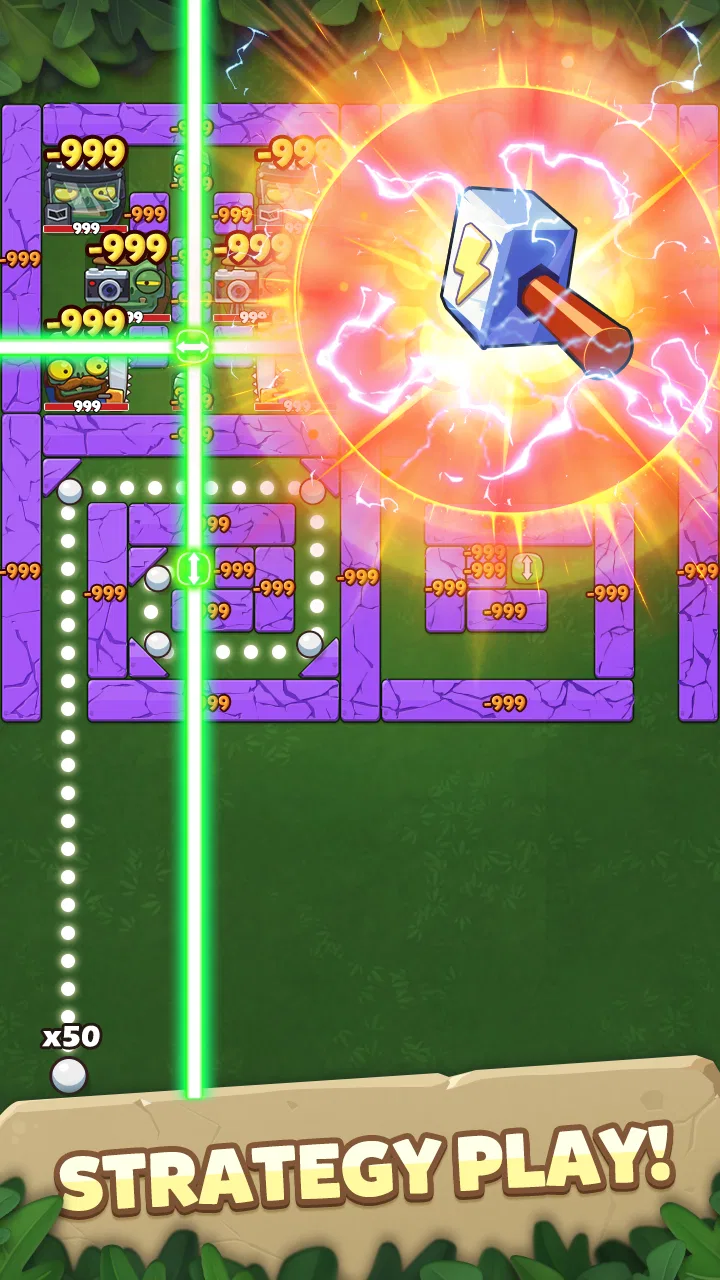
Breaker Fun 2: Zombie Brick belongs to the arcade category, and that description fits its role well. The central idea is immediately understandable even if you have never played a brick-breaker before. You direct the ball toward a field of blocks, watch it bounce through the layout, and try to remove enough obstacles to keep progressing.
The zombie presentation helps separate it from a completely plain block-clearing game. It gives the action a theme without asking me to learn a large set of systems before I can enjoy the first round. That simplicity is one of its strongest qualities. I can open it when I have only a few minutes, understand what I am doing almost instantly, and still have room to improve my decisions.
The important distinction is that the game rewards planning more than frantic tapping. A shot aimed directly at the nearest block may feel productive, but a better angle can send the ball across several parts of the board. I started paying more attention to side rebounds and the order in which blocks could be weakened. That small shift turns the experience from random swiping into a light puzzle wrapped in arcade timing.
What free access means in practical terms
The game is free to download and play, which lowers the risk for anyone curious about this particular style of arcade entertainment. I would treat that as the main value proposition: you can decide whether the brick-breaker loop suits you before spending anything. The game also carries an Everyone age rating, so its presentation is positioned for a broad audience rather than a narrowly mature one.
There are in-app purchases ranging from $0.99 to $99.99 per item. That does not make the free starting point meaningless, but it does mean I would approach optional spending carefully. A free game can be good value when the basic loop is enjoyable on its own; it becomes less attractive if you feel pushed to purchase simply to keep the experience comfortable. My recommendation is to play normally first and decide whether any purchase genuinely improves your routine instead of treating the highest-priced option as part of the expected cost.
This distinction is useful for families as well. The age rating describes the intended content level, but the presence of in-app purchases still makes device-level purchase controls worth considering if children use the phone or tablet. The game can be tried without paying, yet “free” should not be confused with “without possible spending.”
Small decisions that make shots more rewarding
The most useful technique I found was to stop aiming only at the block that looked easiest to hit. In many layouts, the first contact matters less than the direction of the rebound. Before launching, I look for a path that can cross a wider section of the formation or return the ball to a productive area. This is especially helpful when the board begins to feel crowded and a single weak shot would leave too many blocks active.
Another practical habit is to value setup over immediate destruction. Removing one block quickly is satisfying, but opening a lane can create a much better sequence. When I have a choice between a guaranteed hit and an angle that may produce several rebounds, I consider how much of the board each option could influence. That risk-and-reward choice is where the game feels more thoughtful than its simple controls suggest.
I also recommend treating each launch as information. If the ball returns from an awkward angle, I use the next attempt to correct the approach instead of repeating the same shot. This makes the game a good fit for players who enjoy gradual improvement. You do not need a complicated strategy guide; you need patience, attention to geometry, and a willingness to learn from a poor rebound.
How it fits into an everyday routine
A realistic use case is a short break between tasks. If I have a few minutes while waiting for an appointment or taking a pause from work, a brick-breaker is easier to start and stop than a story-driven game. There is no need to remember a plot or rebuild a complex strategy from a previous session. I can focus on the current board, finish a brief attempt, and put the phone away.
That same simplicity can make it suitable for casual play with younger family members. The basic objective is easy to explain, and the Everyone rating supports its broad presentation. I would still supervise purchases on a shared device, but the game’s accessible structure makes it less intimidating than arcade titles that rely on fast combinations or dense menus.
For me, the best sessions are not the ones where I play indefinitely. They are the ones where I try to beat my previous performance, experiment with a different angle, and stop while the game still feels fresh. If you need a long-form experience with character development, exploration, or a strong narrative, this is not trying to fill that role.
Where the tradeoffs become noticeable
The same straightforward design that makes the game approachable also limits its depth. Players who want a large competitive system, extensive customization, or a detailed campaign may find the brick-breaking loop repetitive after the novelty wears off. The zombie theme adds flavor, but it does not turn the game into a full action adventure. Its core remains the controlled destruction of brick patterns.
There is also a difference between enjoying repetition and tolerating repetition. If you like refining the same basic skill through changing arrangements, the loop can remain satisfying. If you need constant new mechanics to stay interested, the familiar structure may feel narrow. I would not choose it as my only mobile game, but I can see keeping it installed as a dependable option for short arcade sessions.
The purchase range is another tradeoff. Free access is a genuine advantage for testing the game, yet the possible cost of optional items means value depends on how you play. Someone who remains happy with the free experience gets a low-cost arcade diversion. Someone who feels compelled to buy repeatedly should pause and ask whether the added spending is improving the actual gameplay or only extending a habit.
Compared with a traditional arcade game that demands quick reflexes, this one gives more room for deliberate aiming. Compared with a pure puzzle game, it adds the uncertainty of bouncing movement and the satisfaction of watching a shot unfold. That middle ground is appealing, but it also means it may not satisfy players looking for either intense speed or deep logical problem-solving.
Performance expectations and device fit
The game supports devices running Android 7.0 or later, which gives it a practical place on many older Android phones as well as newer models. I would still judge the experience by the device’s screen size and touch responsiveness. Precise aiming is easier when the play area is comfortable to view, while a cramped screen can make a carefully chosen angle feel less convenient.
The current version is 2.9.1, so anyone installing it should use the current release available for their device rather than relying on an old copy. I also appreciate that the game’s basic concept does not require a powerful gaming phone to understand its appeal. Its value comes from the interaction and the repeated challenge, not from demanding console-style presentation.
Who is most likely to get good value
I would recommend it first to casual arcade players who like short attempts, simple controls, and a little planning. It is particularly suitable for someone who enjoys watching a carefully aimed shot create a chain reaction. The zombie setting is a bonus for players who want more personality than a completely abstract brick field, without needing a heavy horror atmosphere.
It can also work for returning brick-breaker fans who want a modern mobile version of a familiar idea. The useful question is not whether the concept is new; it is whether you enjoy improving your aim within that concept. If the answer is yes, free access gives you a sensible way to judge the fit before considering any optional purchase.
I would be more cautious about recommending it to players who dislike repetition, want a substantial narrative, or expect every session to introduce a major new system. I would also steer away from it if your main goal is a competitive multiplayer experience or a premium game with one clearly defined upfront price. This title is better understood as an accessible free arcade option with optional spending, not as a paid, story-led package.
Checking the spending fit before you settle in
One useful way to approach the purchase question is to separate curiosity from commitment. Since the game can be started for free, I would first try a few sessions and notice whether I return because I enjoy choosing shots or because I feel that progress depends on buying something. The listed item prices span from $0.99 to $99.99, but that range alone does not tell me what any individual purchase provides or whether it is necessary. I would only spend after checking the item’s description and deciding that its specific value makes sense to me.
That is also the clearest answer to whether a player needs to pay to enjoy it: the free entry point lets you assess the core loop without paying, while optional purchases are available. I would not assume that paying is required, nor promise that every part of the experience is equally accessible without spending. If a purchase prompt appears during a session, taking a moment to read it rather than tapping through is a sensible habit, particularly on a shared family device.
The game is developed by Amazbit and has a 4.6 average from around 59 thousand ratings, with about 4.7 thousand written reviews and over one million installs. That level of uptake can help a new player feel they are considering an established mobile title, but popularity cannot settle the personal question of whether its pace and purchase approach suit you. I would use the free start to make that decision myself, rather than treating ratings as a guarantee of fit.
Where it sits among mobile arcade choices
Against endless runners and reflex-heavy arcade games, this is a calmer choice: the interest comes from reading the brick layout and picking a useful trajectory, rather than constantly reacting to incoming hazards. Against minimalist ball-and-block games, its zombie identity gives the board a more defined theme. Neither comparison makes it automatically better; it simply points to the audience I think will appreciate it most—players who want familiar arcade rules with a little tactical thought.
If I were choosing between this and a conventional paddle-based brick-breaker, I would ask whether I want to steer a bouncing ball through a formation or rely more on quick paddle positioning. Those styles reward different habits. This game is the better fit when planning a shot and watching its path is the appeal; a faster, reflex-led alternative is likely more satisfying if constant movement is what keeps you engaged. A dedicated puzzle game is a better choice when you want outcomes to follow strict logic rather than the uncertainty of rebounds.
For a daily routine, I would use it as a small reset rather than a game to keep open for long stretches. A short wait in a lobby or a quiet pause at home gives me enough time to focus on one attempt without needing to reserve a whole evening. If I am tired and do not want to think about angles, I may choose something more passive instead; if I want a narrative to pull me through several sessions, I would pick a story-led game. Knowing that boundary makes this arcade option easier to enjoy on its own terms.
My final recommendation
After playing it, I see Breaker Fun 2: Zombie Brick as a solid choice for low-commitment arcade entertainment. Its strongest point is the way a very simple control scheme can still reward better angles, more patient setup, and attention to rebounds. The zombie theme gives the familiar format a recognizable identity, while the free starting point makes trying it an easy decision.
My advice is to install it if you want a quick brick-breaker that can fill small gaps in the day. Play long enough to decide whether the basic loop itself is enjoyable, then keep spending optional rather than automatic. The best value is available when the free gameplay already feels complete enough for your routine.
I would skip it if you are searching for a deep campaign, a high-speed reflex challenge, or a premium experience without optional purchases. For everyone else, especially players who enjoy turning a simple bounce into a carefully planned chain, it is worth a try. Developed by Amazbit, the game has reached over one million installs and holds a 4.6 average from around 59 thousand ratings, which matches my overall impression: it is an approachable arcade diversion with a clear audience, useful replay value, and limits that are easy to understand before you spend money.
FAQs for Breaker Fun 2: Zombie Brick
01What is Breaker Fun 2: Zombie Brick?
Breaker Fun 2: Zombie Brick is a brick-breaking puzzle game with a zombie-themed setting. You aim and launch bouncing balls to destroy groups of blocks, clear stages, collect rewards, and progress through increasingly challenging levels. The game combines classic brick breaker mechanics with adventure-style progression, obstacles, power-ups, and visual effects designed to make short play sessions feel varied and entertaining.
02How do you play Breaker Fun 2: Zombie Brick?
Gameplay is based on choosing an angle, launching a group of balls, and breaking numbered or special bricks before they reach the bottom of the screen. Players need to plan shots carefully, use walls to create useful rebounds, and collect additional balls or power-ups whenever possible. Each turn ends after the balls finish moving, so positioning and trajectory are important for clearing difficult formations.
03Is Breaker Fun 2: Zombie Brick free to download and play?
Breaker Fun 2: Zombie Brick can generally be downloaded and played without an upfront purchase, allowing users to try its core levels and mechanics at no initial cost. However, free-to-play games may include advertising, optional purchases, or systems that encourage spending resources to continue or progress faster. Before downloading, check the current store listing for pricing, advertisements, and in-app purchase details.
04Does Breaker Fun 2: Zombie Brick require an internet connection?
The basic brick-breaking gameplay may be available during some offline sessions, but certain features can depend on an internet connection. Advertisements, cloud saves, event content, account synchronization, and purchase verification may not work correctly without online access. Requirements can also change after updates, so players should consult the official Android or iOS store description if offline play is an important consideration.
05Is Breaker Fun 2: Zombie Brick suitable for children?
The game uses cartoon-style zombie imagery rather than realistic horror, but parents should still review its age rating and store information before allowing younger children to play. The main concerns are usually advertisements, optional in-app purchases, and possible prompts to watch videos or spend premium resources. Device parental controls and purchase restrictions are recommended for children using the app independently.
Pros
- Simple one-touch controls make it easy to start playing immediately.
- Short levels are well suited to quick gaming sessions.
- Zombie-themed visuals give the classic brick-breaker format extra personality.
- Power-ups add variety and help break up repetitive gameplay.
- Works well for casual players who prefer relaxed
- uncomplicated challenges.
Cons
- Gameplay can become repetitive after extended sessions.
- Later stages may feel more dependent on luck than strategy.
- The small play area can make fast-moving balls difficult to follow.
- Some players may find the zombie theme too limited in visual variety.
- Progression may feel shallow for users seeking a deeper arcade experience.

Breaker Fun 2: Zombie Brick
Gallery